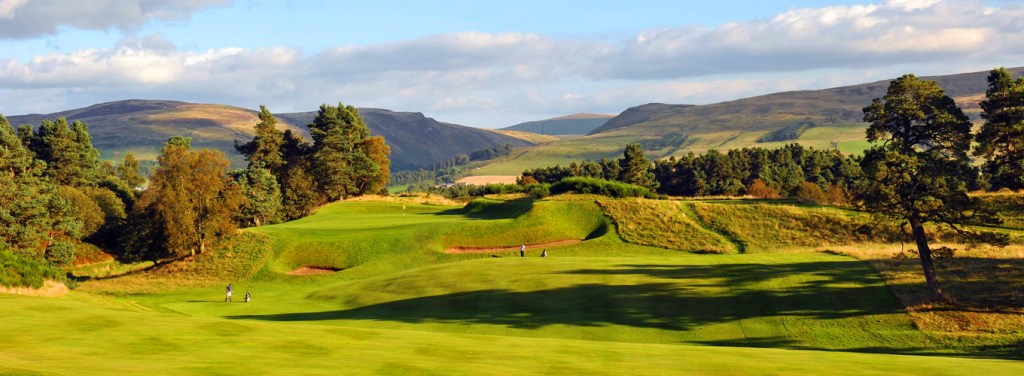
Played 7th/9th April 2026
As a resort course it is generally quite difficult to disentangle the components and try to judge the ‘resort’ and the ‘course’ side separately, and to be honest I am not sure whether that is the right approach in any case, as ultimately we experience things in the form that they are presented, so judging one without the other seems a theoretical exercise to some degree.
So as a whole, a trip to Gleneagles is a fantastic way to spend a long week, especially if looking for somewhere where the whole family will have a great time. The kid’s club is fantastic, the hotel facilities and food is great, and over the years they have kept adding loads of various activities. Yes you are always going to be tied to the weather given the geography, but they do a great job in making sure the experience is as least tied to the weather as possible.
With regards to the golf, I had originally booked to play the King’s course and the PGA, the latter largely due to having watched the 2014 Ryder Cup in person and wanted to see how many of the holes I could remember. However, after playing the King’s course the first time I decided to change my second booking to play that course again, and leave the PGA for another time. Ultimately, looking out over the first tee of the PGA didn’t fill me with the same desire as the King’s, given that the PGA is a more American tournament layout that is dropped in Scotland. Ultimately I went for the more authentic experience.
On to the King’s course, which is one of the best inland courses in Scotland and rightly so. What the course does extremely well (and probably better than any other course I have played) is make every single hole interesting without trespassing on gimmicky. This is quite a delicate balancing act, and with the exception of the 9th hole, I think every other hole accomplishes this feat. Even writing this several weeks post the trip, I am able to recount so many of the details on all the holes, which generally speaks volumes for the quality of the golfing experience.
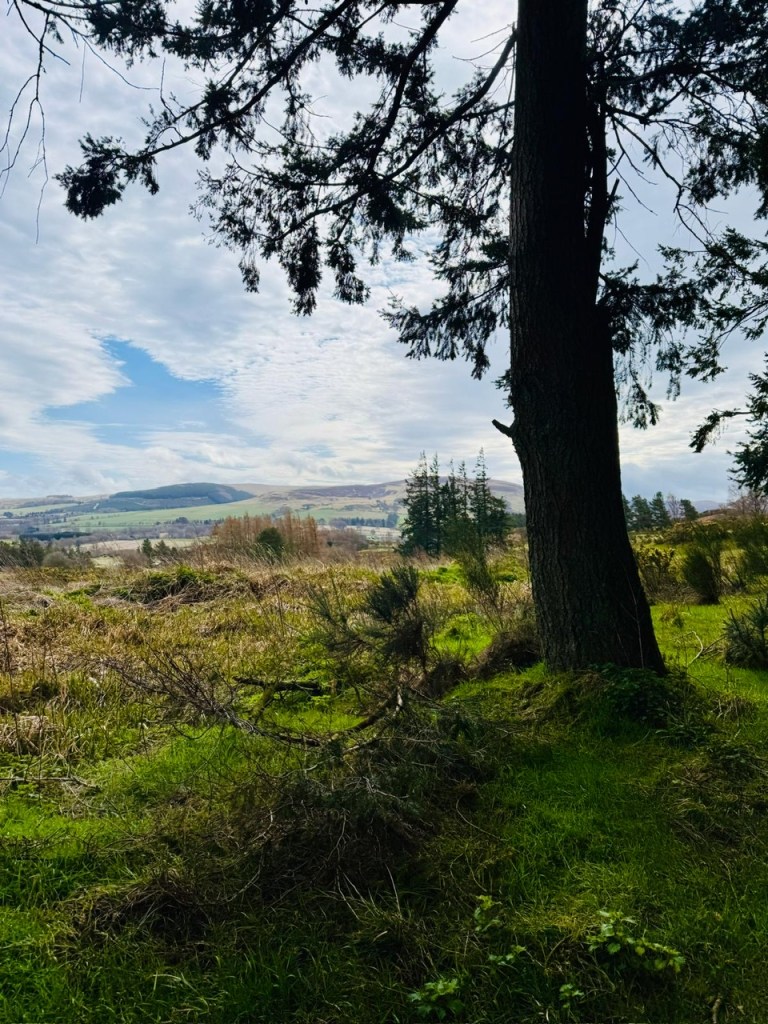
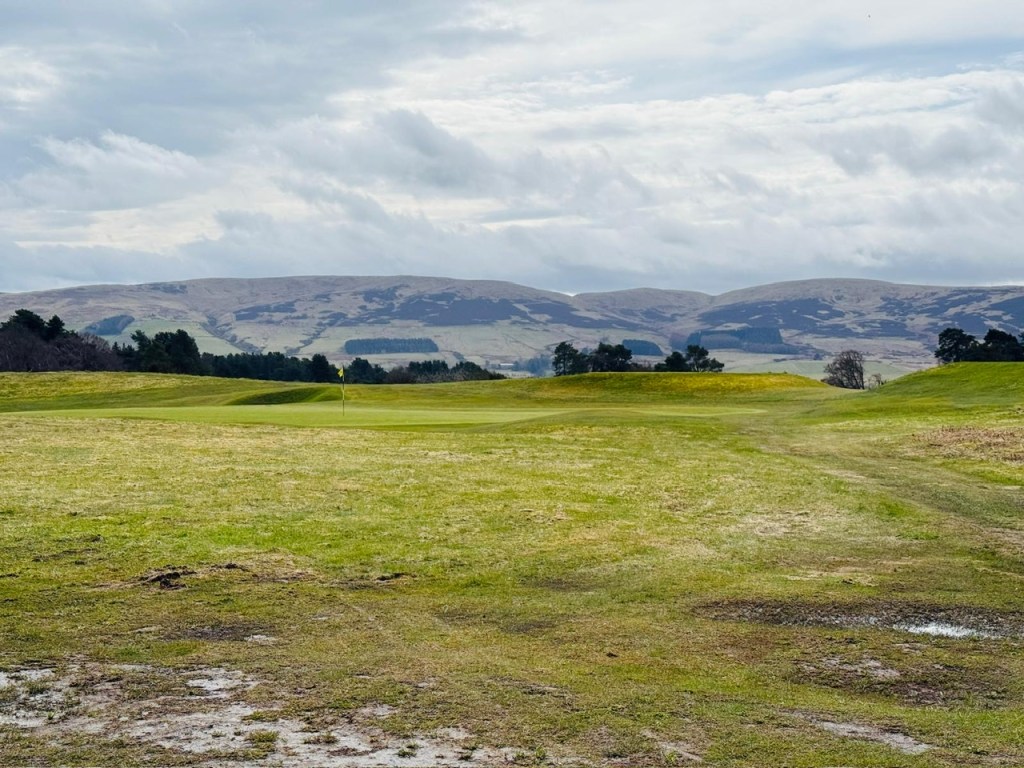
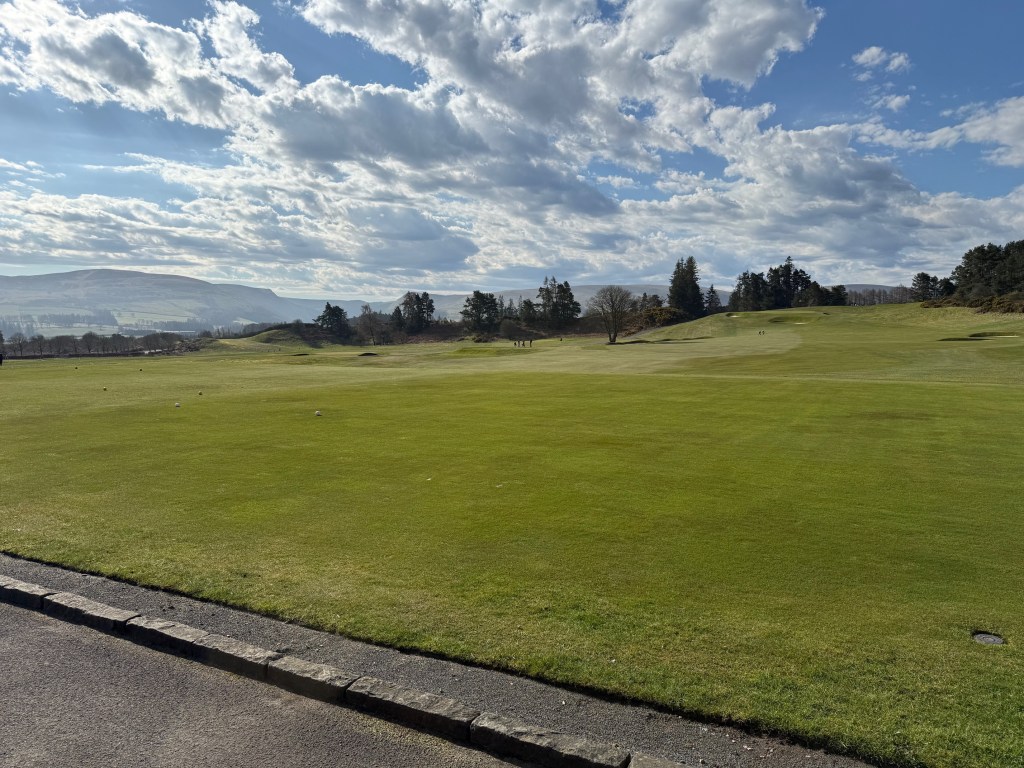
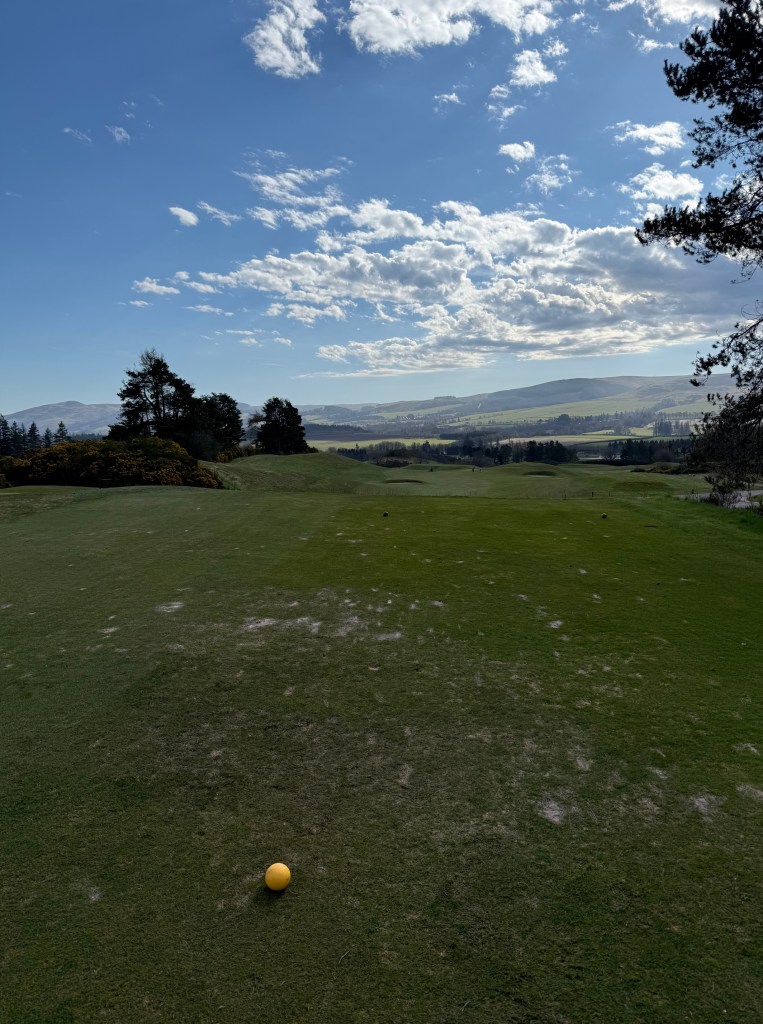
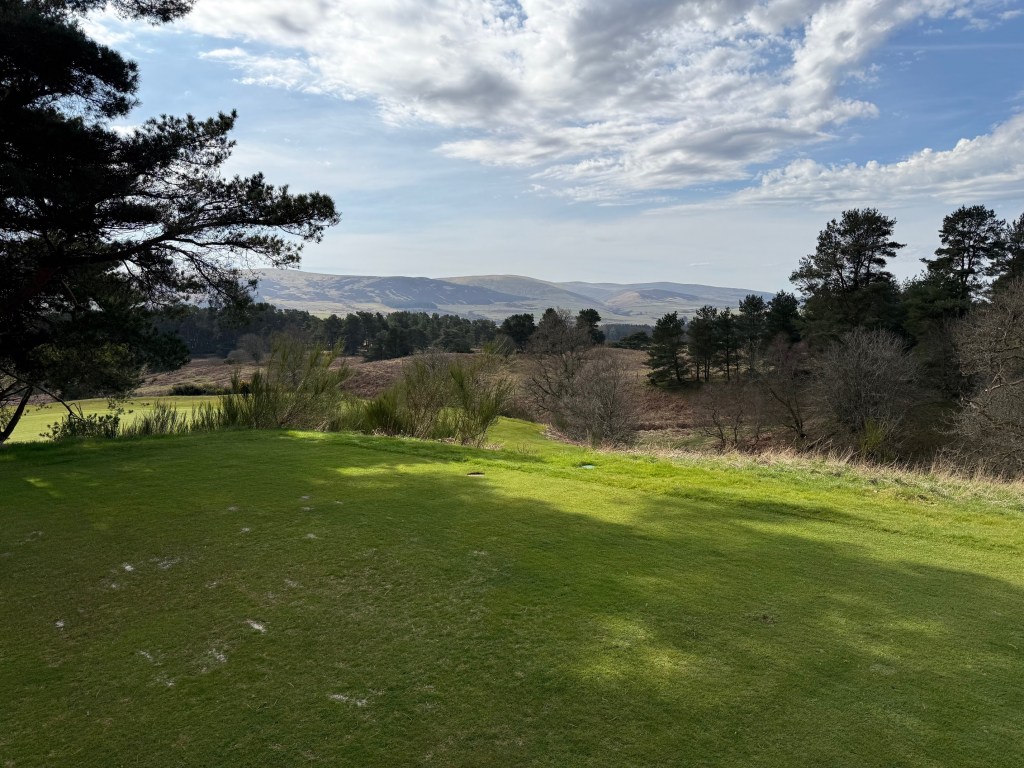
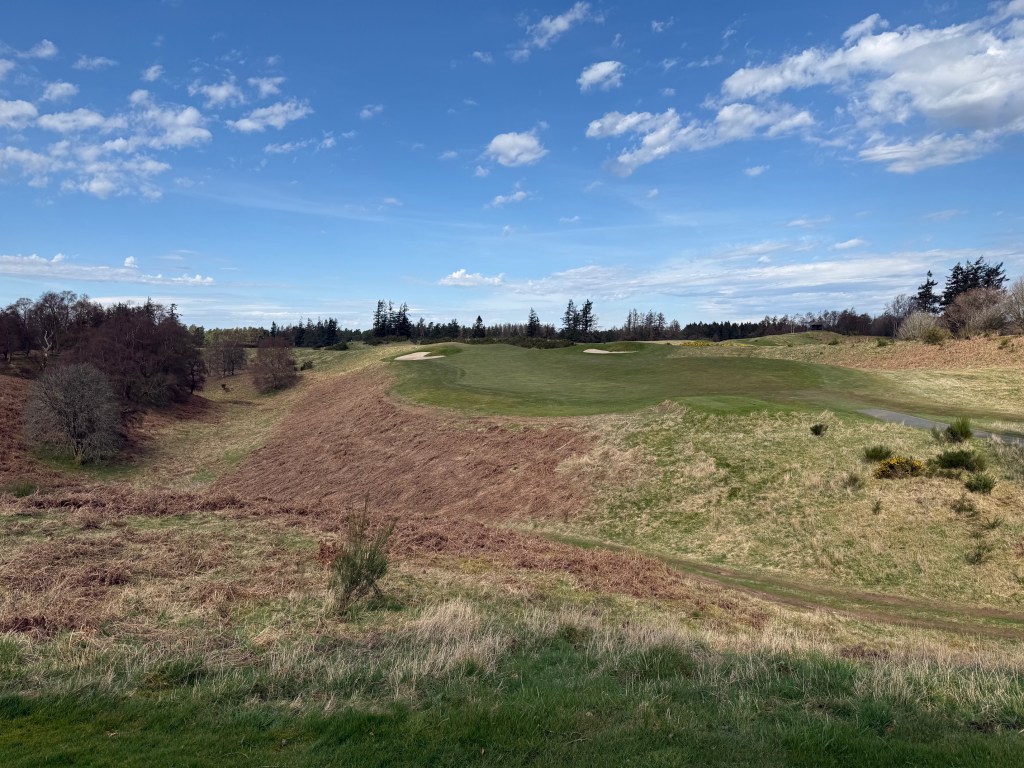
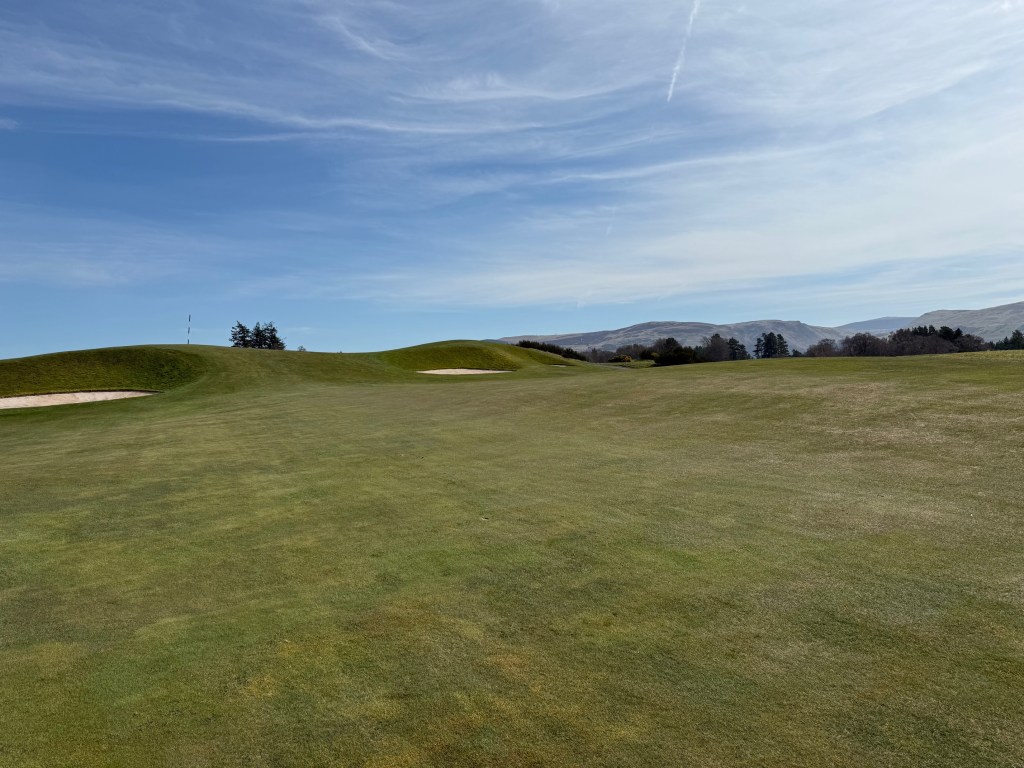
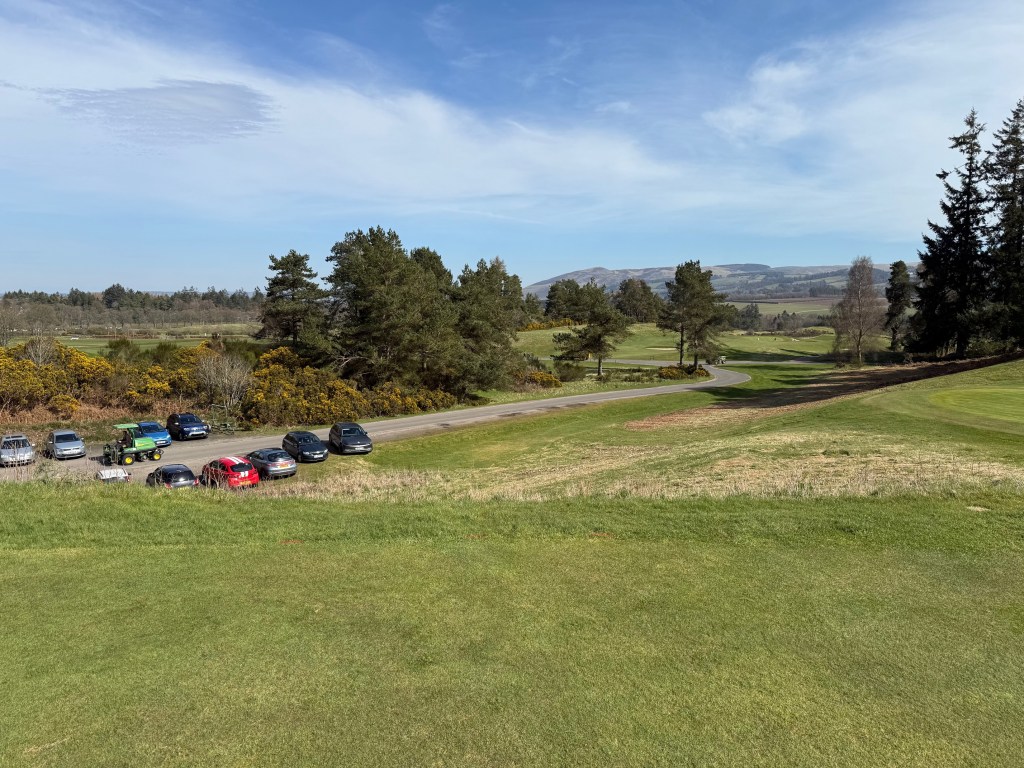
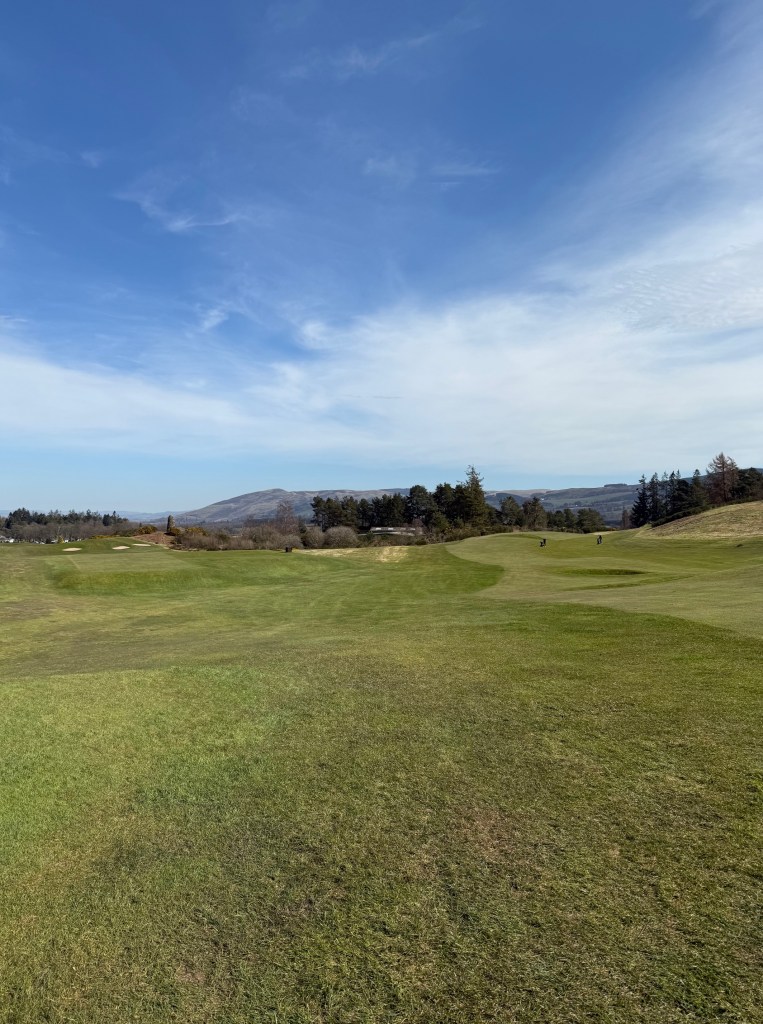
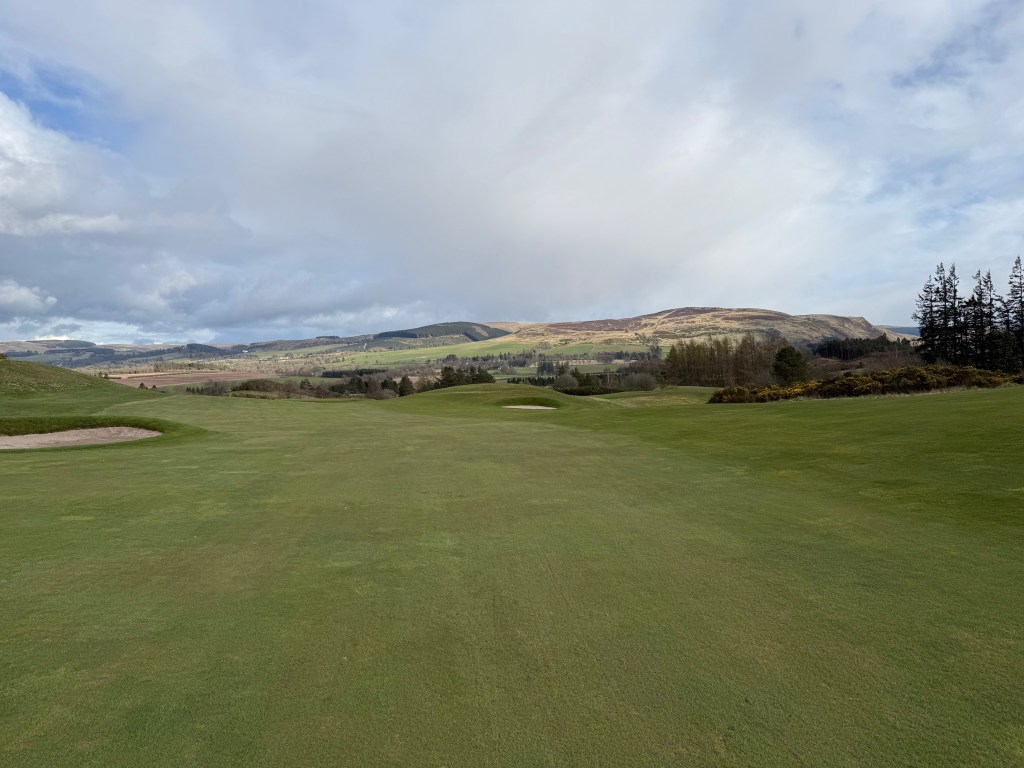
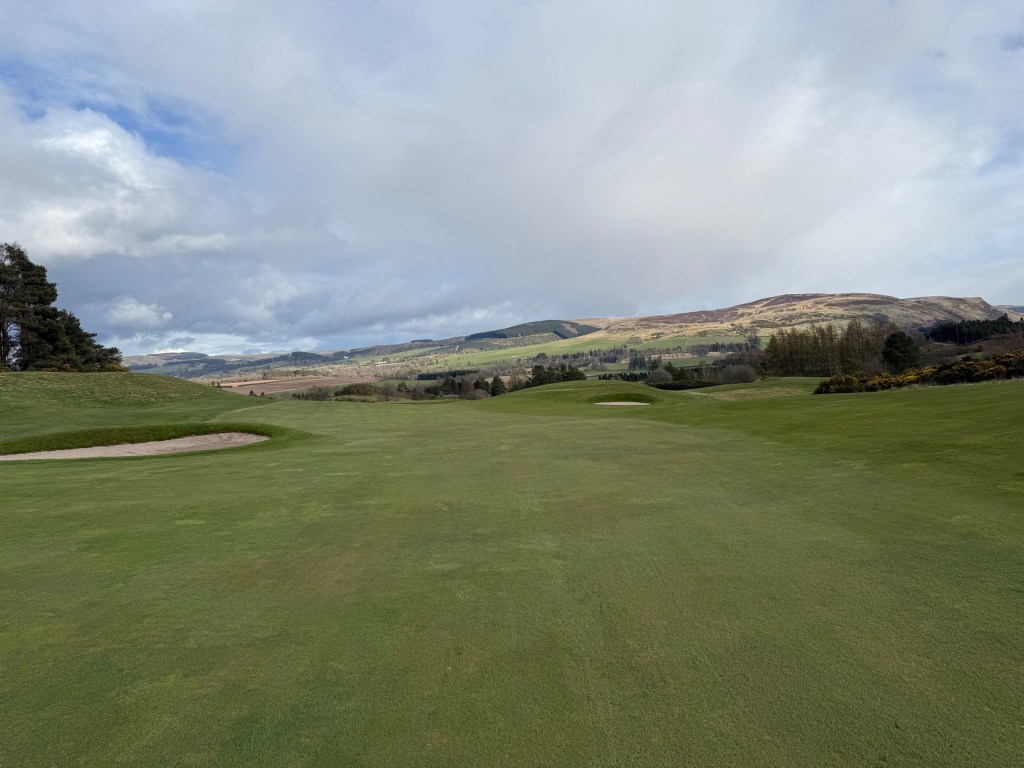
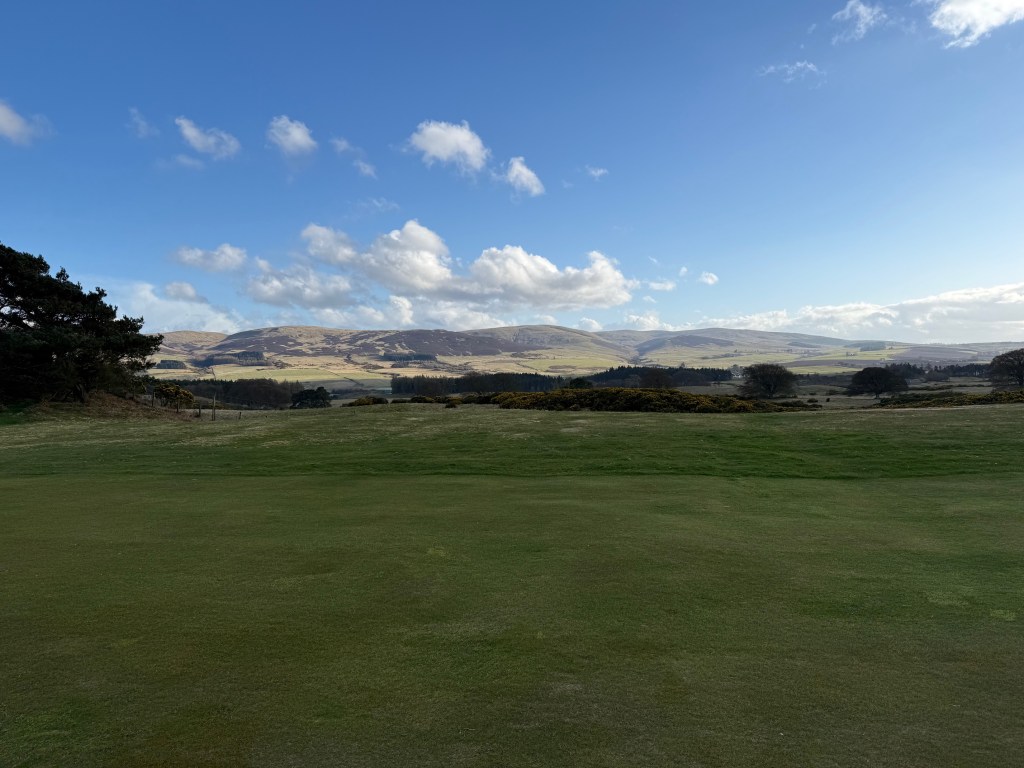
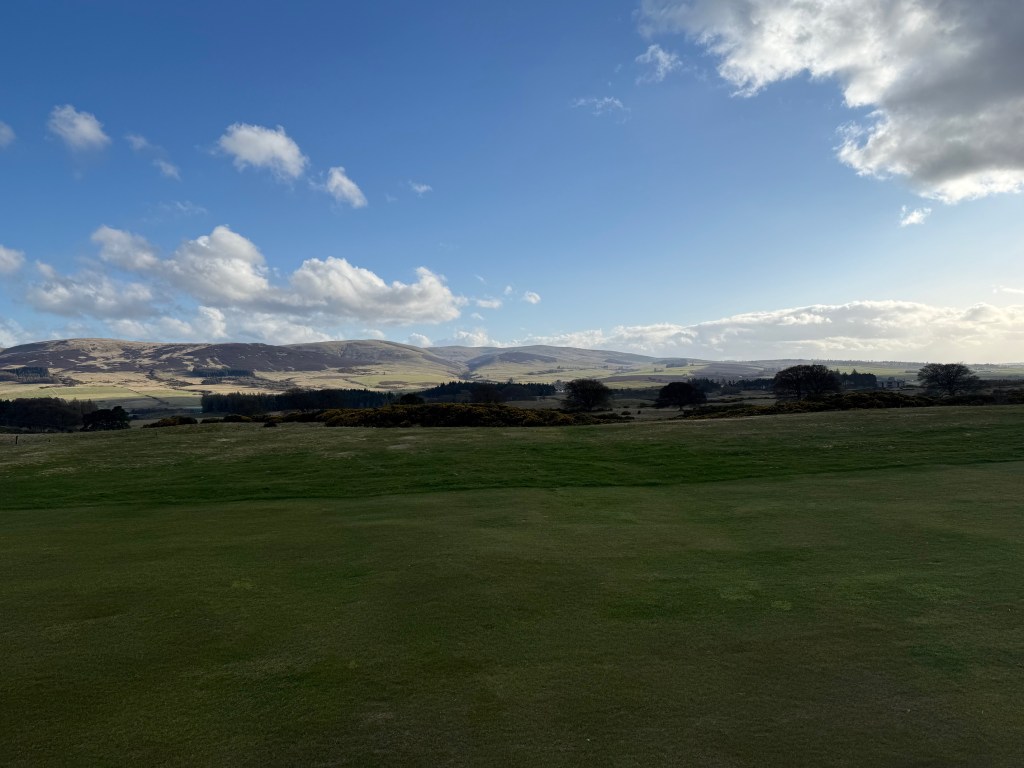
You certainly get a very links type experience, with tight fairways/green surrounds, howling winds and generally quite a spectrum of seasons within a single round. However, what you miss in terms of the proximity to the sea you make up for the stunning mountainous visuals in the distance, which provide a sort of large scale amphitheater feel to the experience. You also get a lot more elevation changes than you typically do at a links course, which again allows for arguably a more interesting golfing experience. Would I pick this over a traditional sea-side links? Very unlikely as I think the sea is such a quintessential part of golfing on the British Isles, but as a standalone product it is fabulous nonetheless.
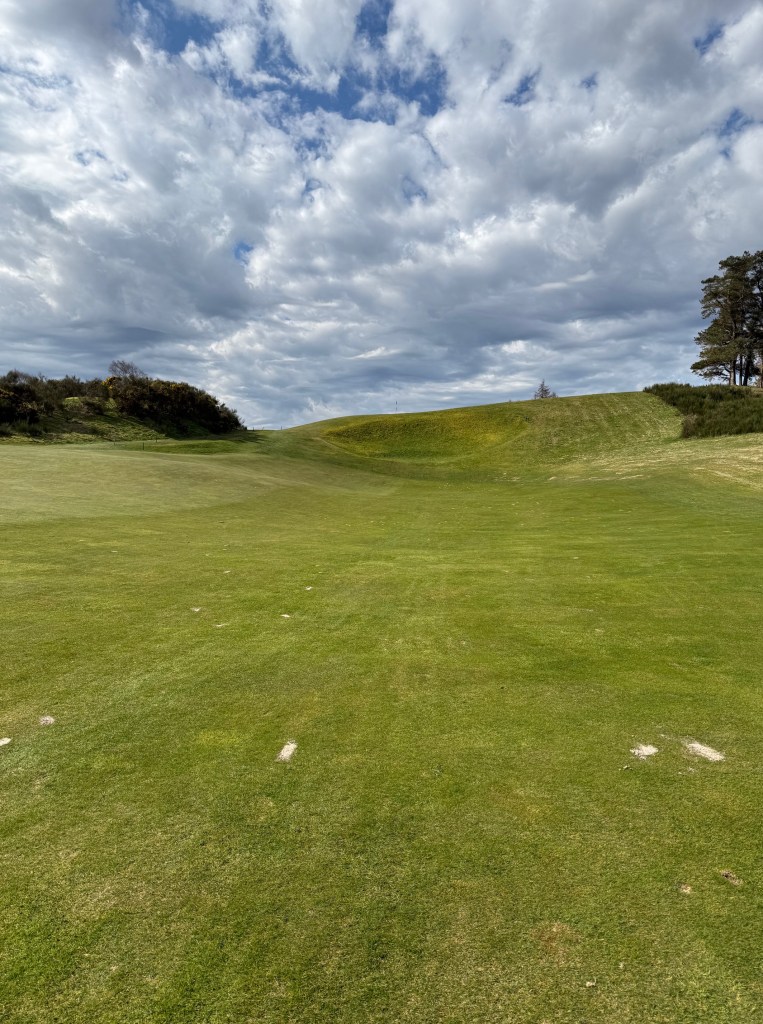
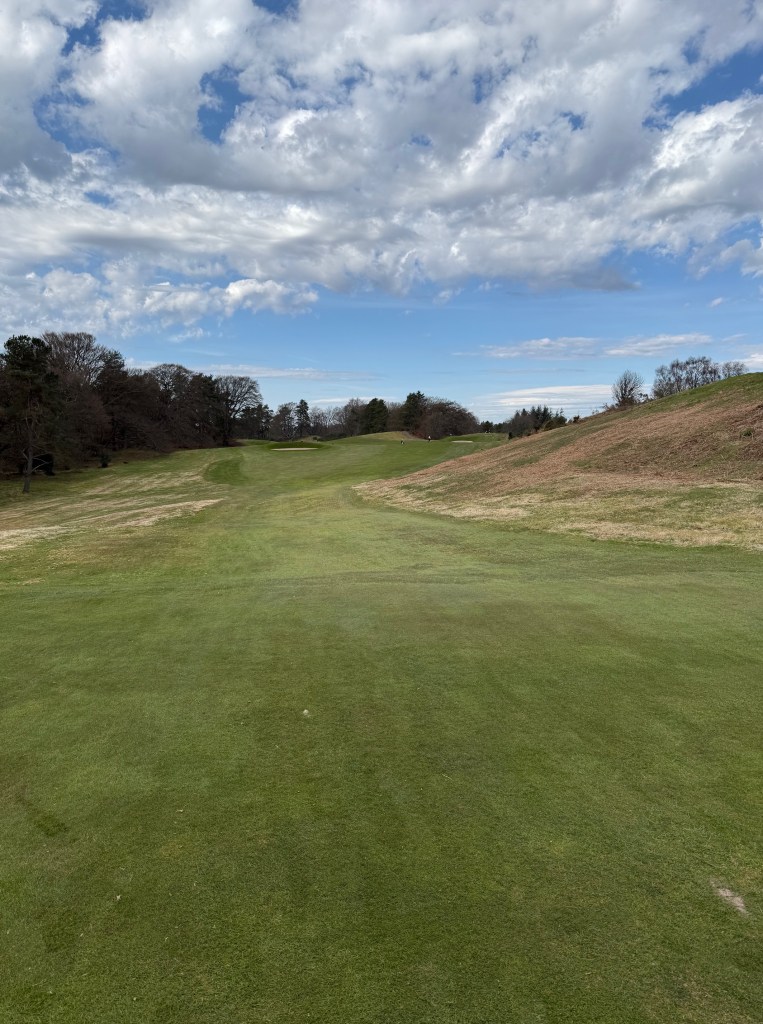
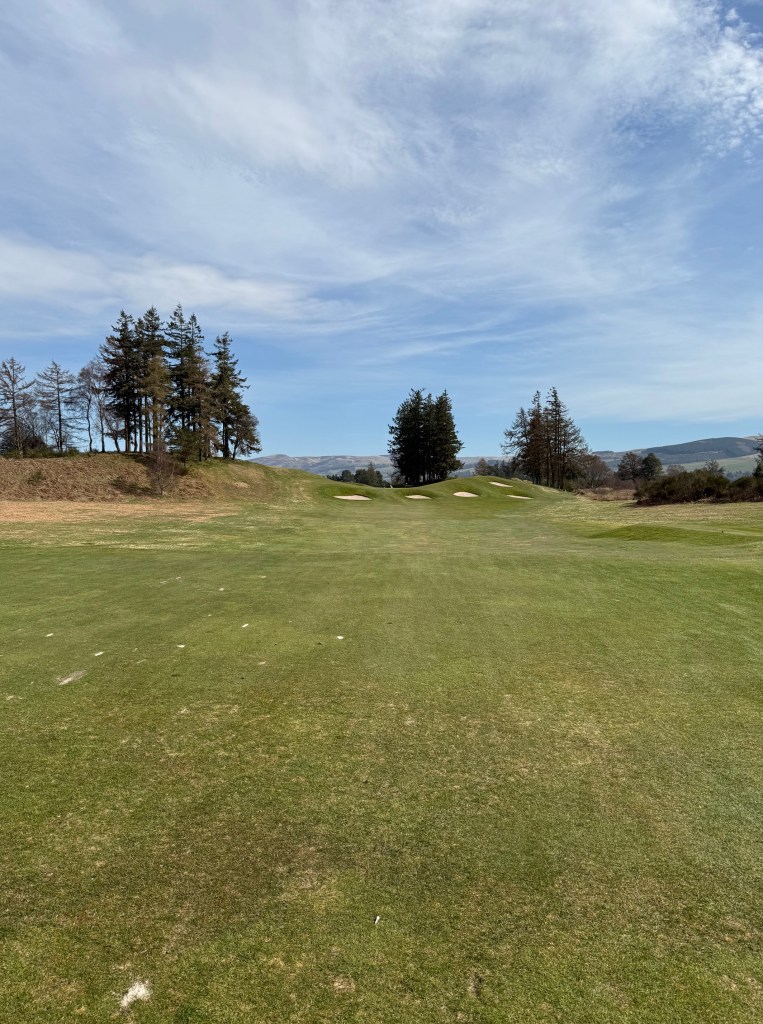
The opening hole is a relatively straightforward hole, with an insanely wide fairway to aim for, and the defense of the hole is a very elevated green in to which you have to be very careful with club selection. Anything short and you have to chip with the stance of a mountain goat, and anything over the back runs down 20 feet below the green and you are faced with a 20yd chip onto an elevated green with a green that slopes away from you. Having experienced both options, I would heavily recommend just getting it on the green.
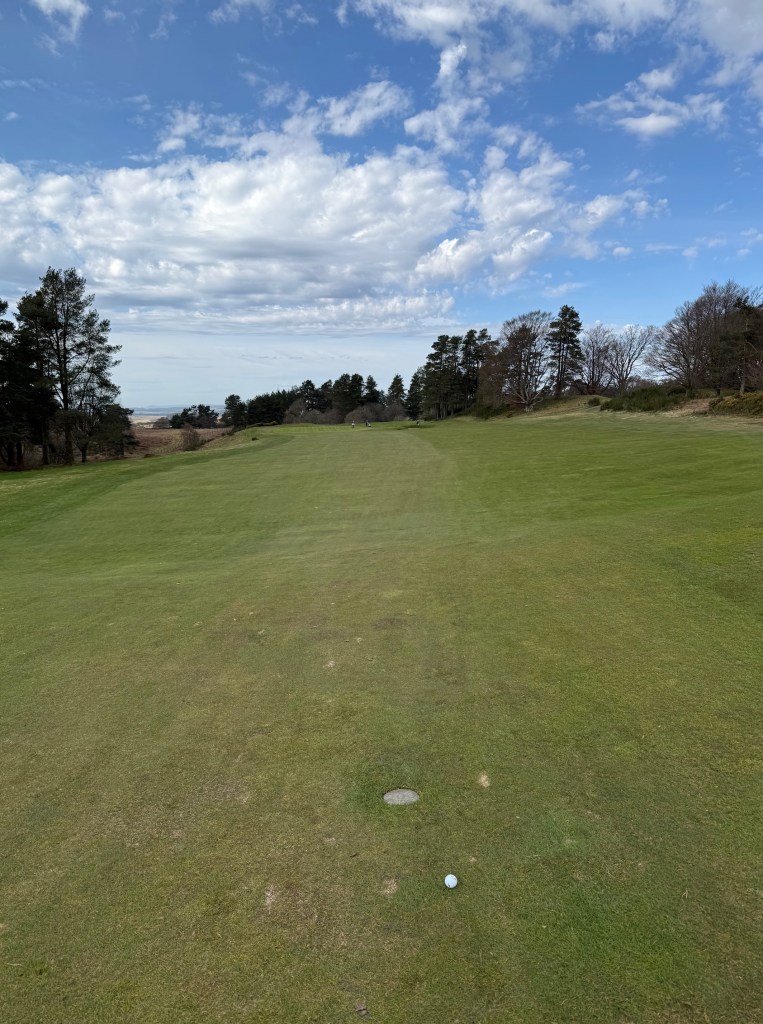
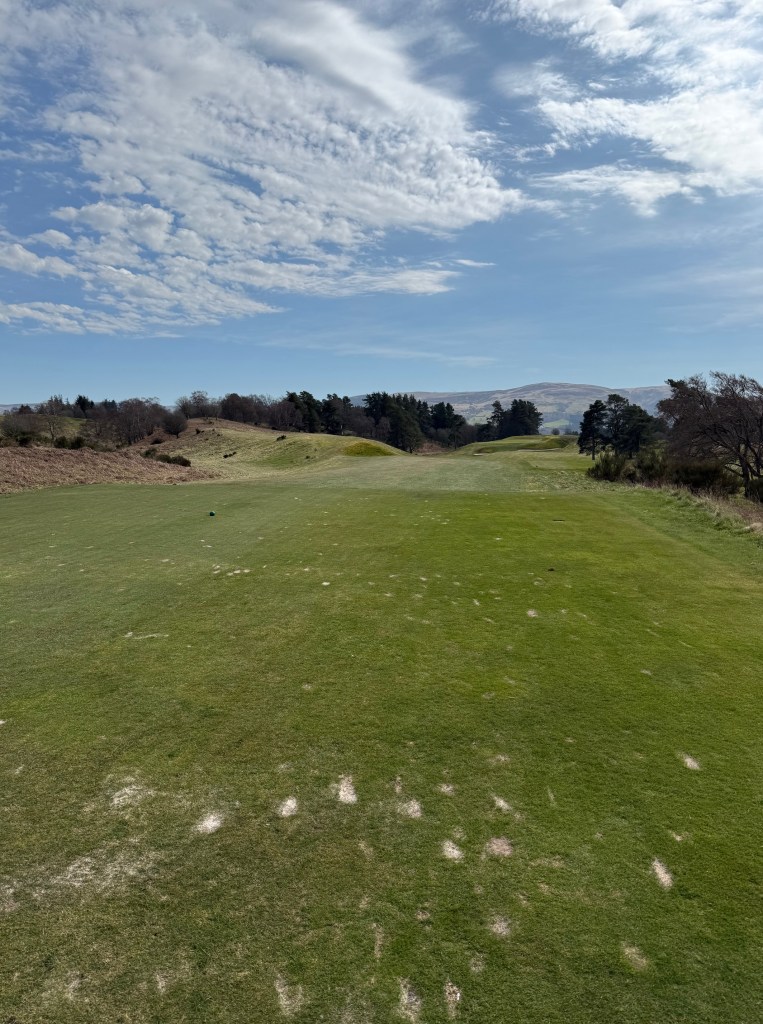
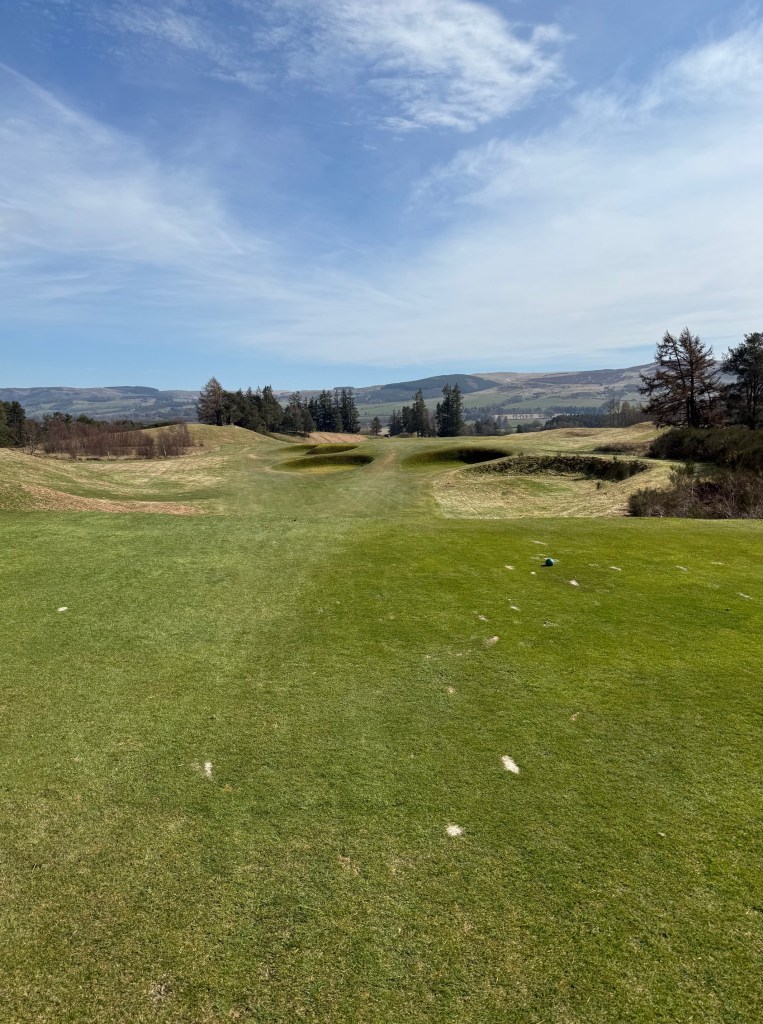
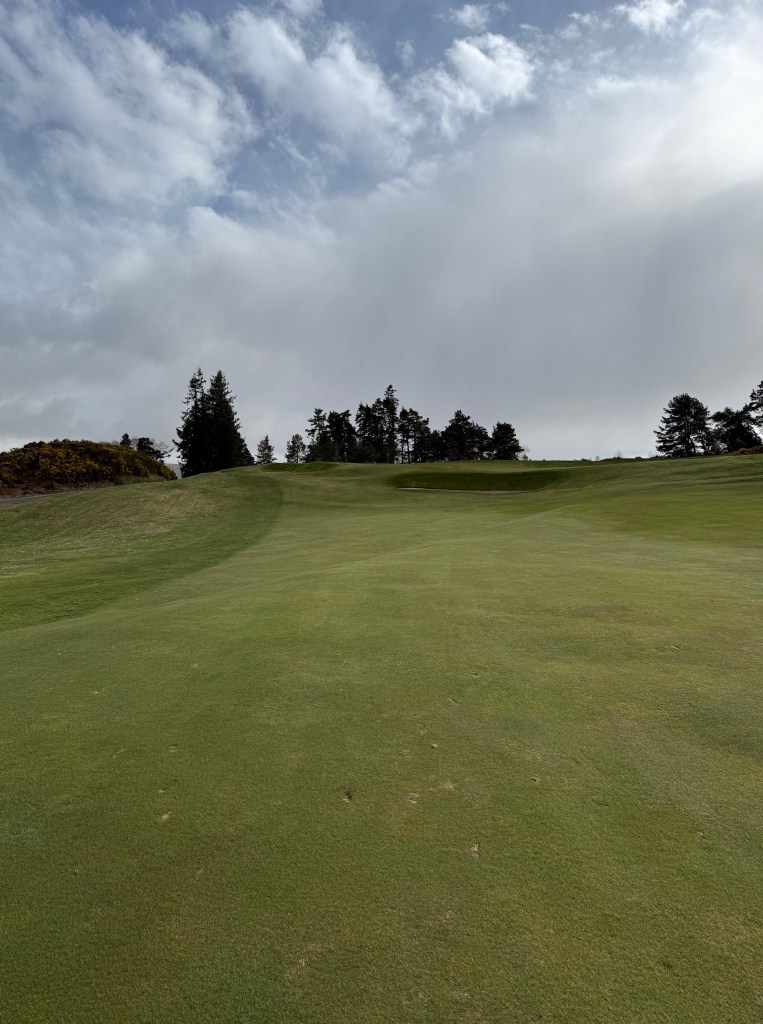
The second hole is a short downhill par 4 where the course guide recommends not taking driver, and this advice should be promptly disregarded. It is a hole where the driver actually feels the safest option. If there was a common thread in terms of hole set up on the course, it would be the concept of an intimating and somewhat blind tee-shot, but with the intimidation largely being visual only, as in reality the landing areas off the tee are very generous. I quite like this approach, as it forces thought and decision making, but at the same time makes it very playable without having to constantly be looking for balls because you don’t quite know the course layout.
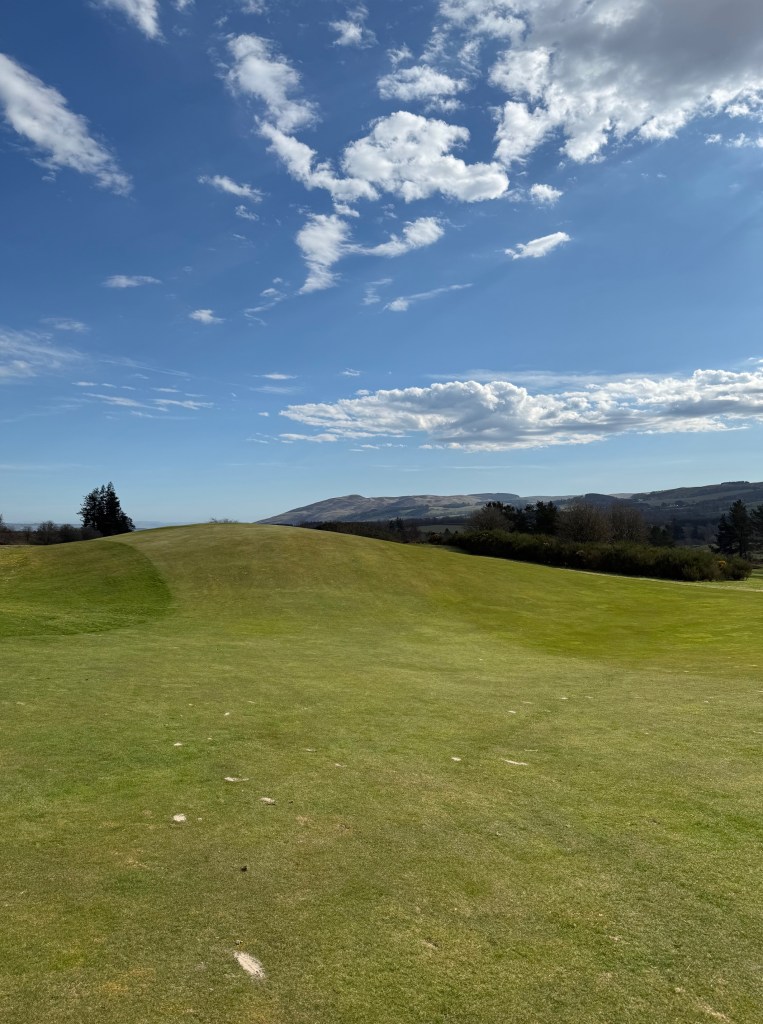
Third hole is the exception to this, with the approach shot over a very large mound into a two tiered green which really needs to be hit on the correct level to ensure a two putt.
The fourth hole is a long uphill par 4 which if the wind isn’t with you really acts like a par 5 in practice, and playing it as one I think actually improves the score.
Fifth is the first par 3, with a relatively short shot required but the green heavily defended with perilous slopes and bunkers on all sides. It is one where it’s not the hardest shot to hit the green, but if it is missed it is a proper penalty. The difficulty really ramps up if the wind picks up as you are really being asked to be quite precise in terms of yardages.
Sixth is the first par 5, which with the right drive/shape can be fairly easily hit in 2, but the second shot asking for quite a bit of accuracy as left is a huge run-off area.
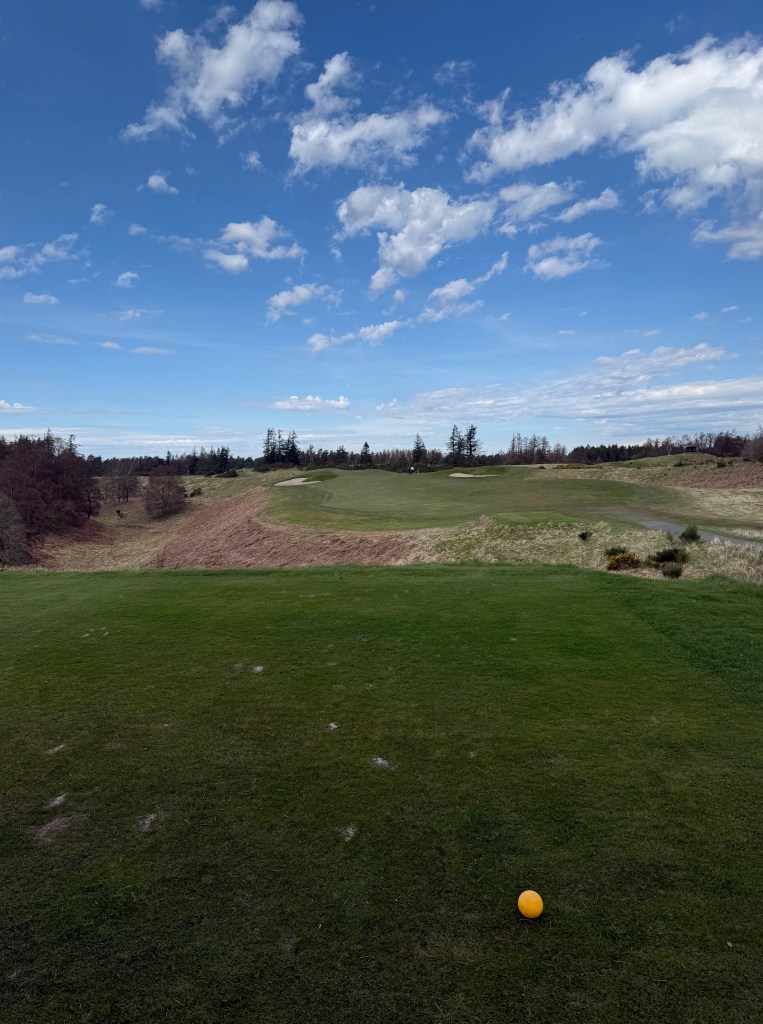
Seventh is another visually intimidating tee-shot, with a dogleg left and tempting carry over the waste area. However, important to look at the course guide here, as there is so much extra bail out room on the right that is invisible to the naked eye that the real play is to not even consider the left side.
Eighth is another shorter par 3, but with a very narrow green that also is a much shorter carry on the left than the right, and very heavily sloping once on the putting surface. I got a bogey both times and both felt like an amazing escape to walk away with that result.
Ninth as mentioned is the one hole that I find a bit too gimmicky. It feels like a tee shot of 150 – 250yds and either 30yds left or 20yds right will end up in the same resting spot at the bottom of the hill, and then you face an uphill shot to a very small and elevated green with bunkers and quite large run-off areas. Overall, this was a little bit too crazy golf for my liking.
As an antithesis to this, the tenth hole is the polar opposite, being the one more boring hole on the course, a relatively straight par 4, only made more exciting by the proximity to the nearby landscape on the left hand side.
Eleventh is a long par 3, but based on wind and pin position can be anywhere between a 7iron and a 7wood which makes it very tricky.
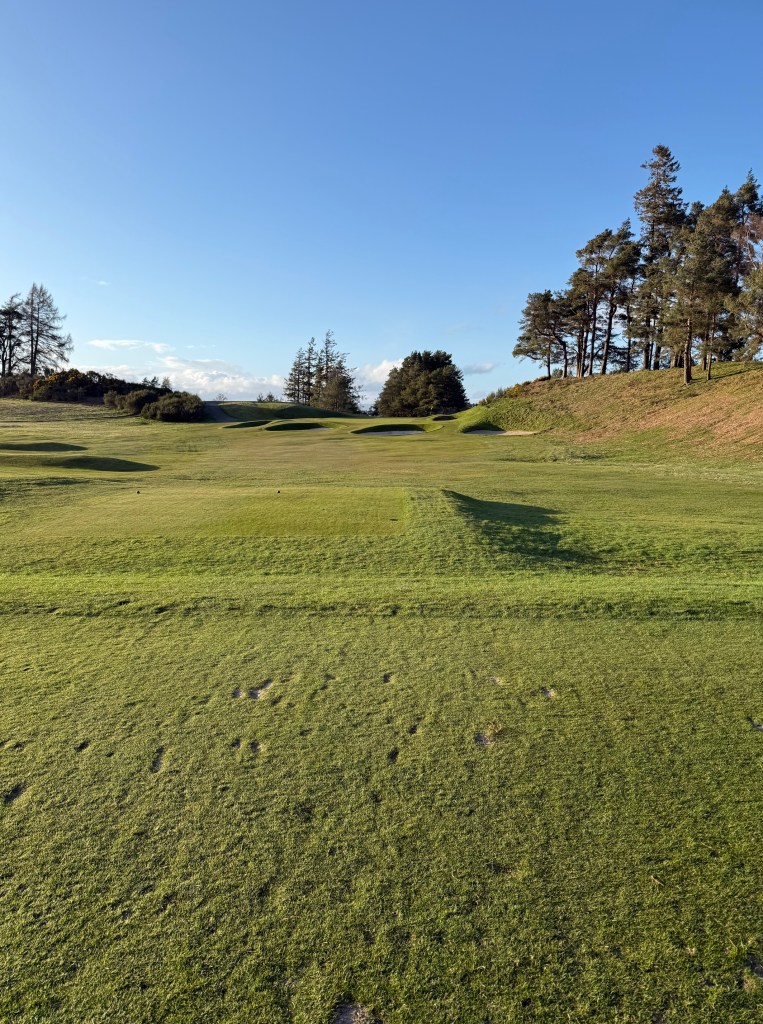
Twelve is another interesting par 4 with a blind tee shot over a hill that then opens up into quite a generous fairway.
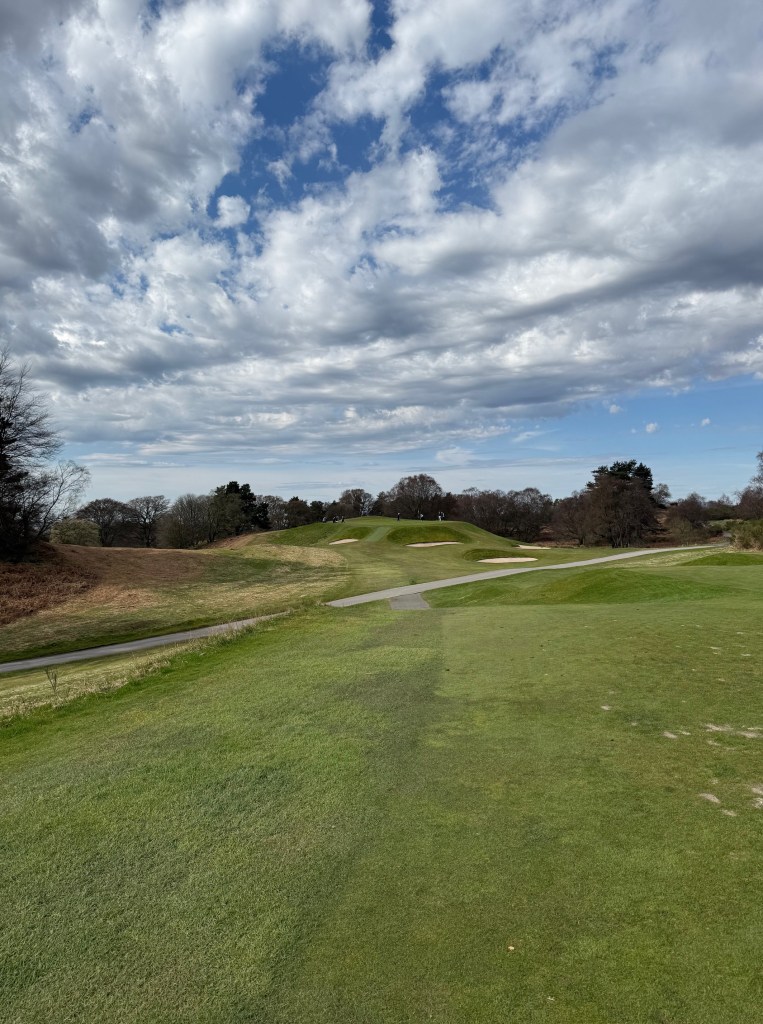
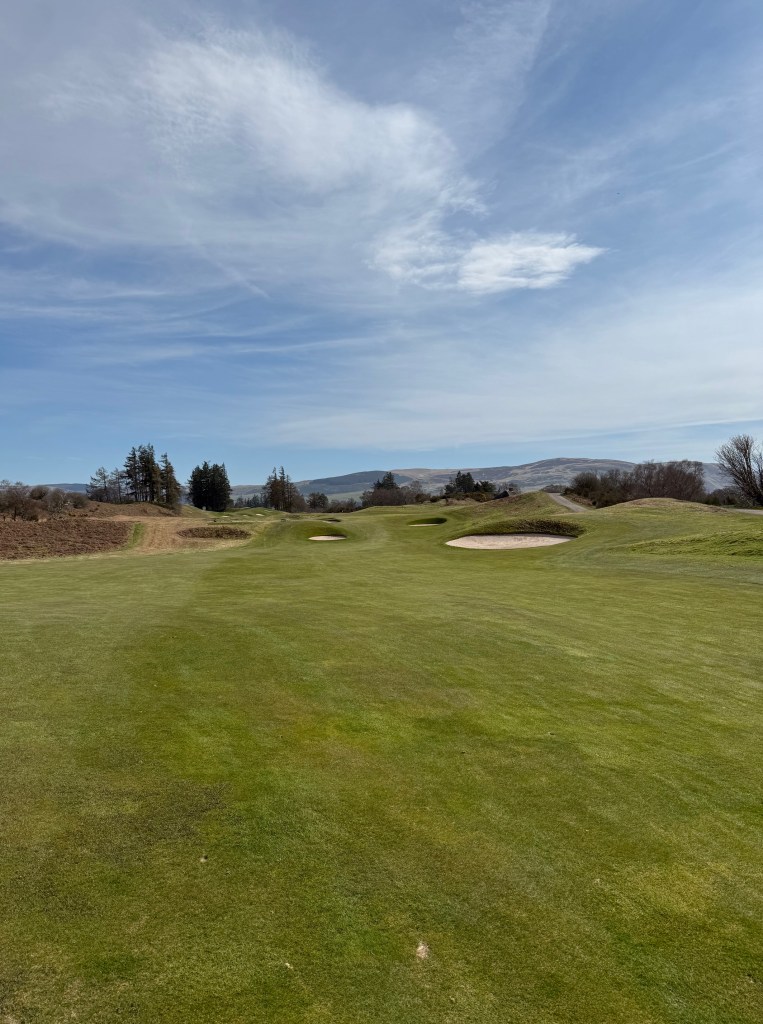
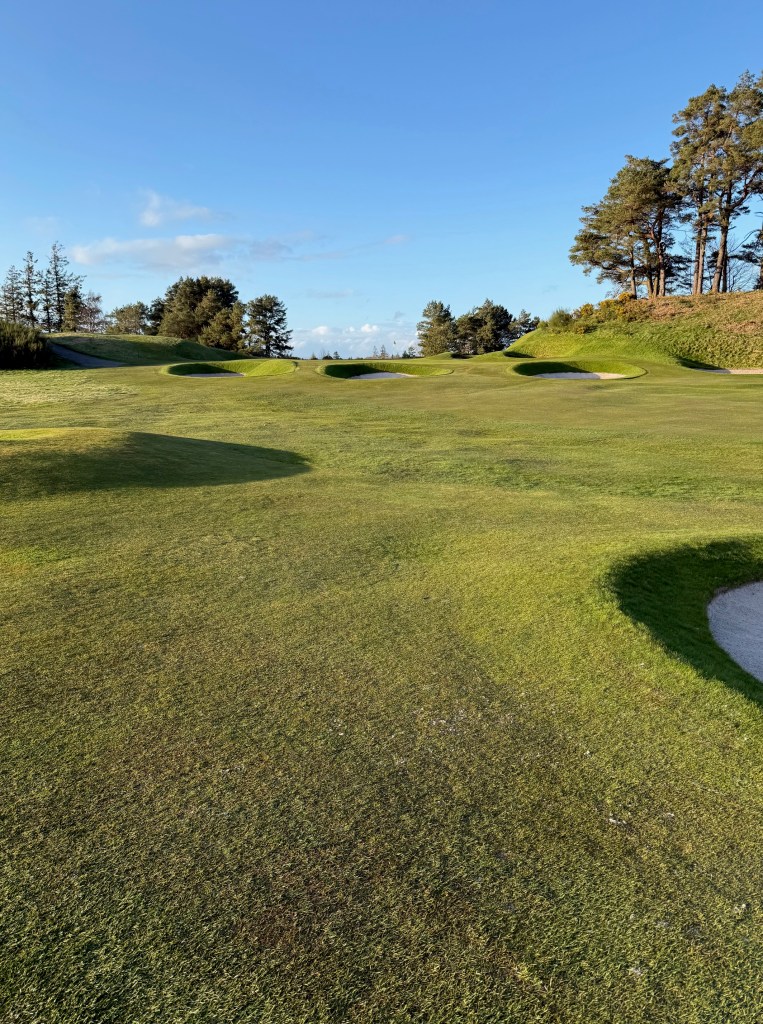
Thirteenth is a visually stunning long par 4 with loads of bunkers in view that need to be carried, but if they are on the left hand side you get rewarded with plenty of roll to make the approach shot vey manageable.
Fourteenth is a 250yd par 4 that is a very good risk/reward hole as anything not on the green is going to be quite a tricky bunker shot/chip.
Fifteenth is a downhill par 4 that again presents a blind but generous landing area. The real defense here is judging the distance/roll on a downhill approach shot on a very two tiered green with the lower tier being towards the back. Probably the most time spent deciding on how to play the distance on the whole course.
Sixteenth is a short-ish par 3 but with an extremely tricky green, especially if the pin is tucked at the front. The front bunkers essentially mean any put will be severely downhill and almost impossible to stop.
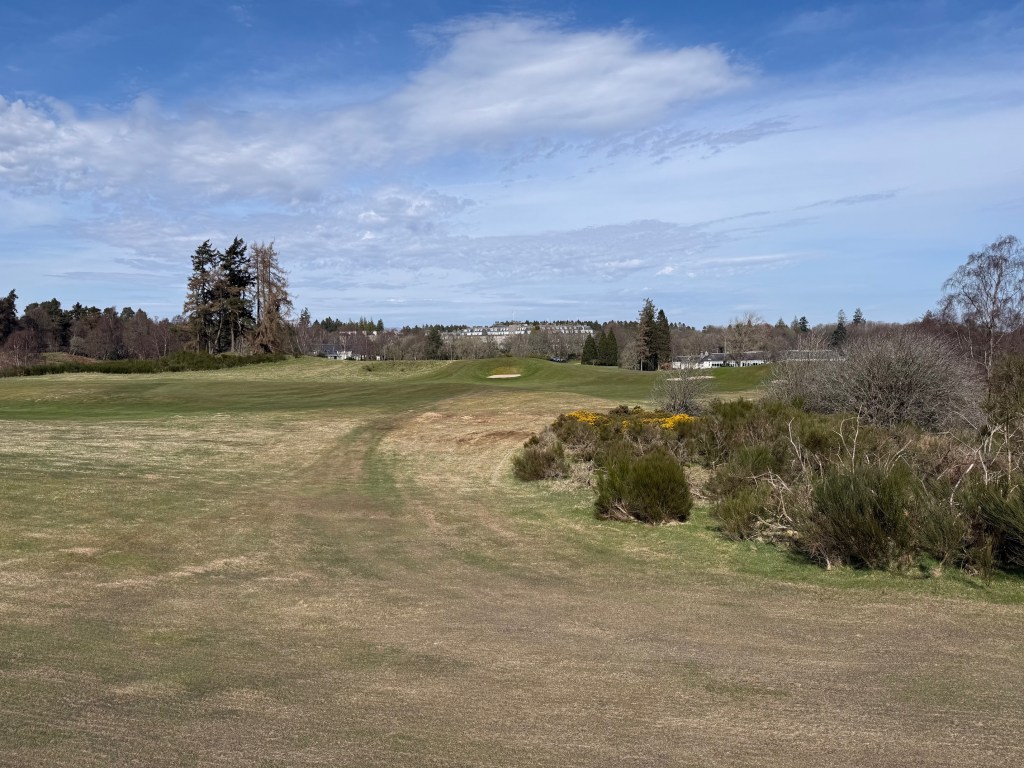
Seventeenth and Eighteenth are relatively non stress-full finishing holes, with the Par 4 a dog leg left where there is plently of room to bail out to the right, with the only penalty being a longer approach shot, and the last par 5 again has quite generous landing areas on both the tee shot and second shot (again the second shot is likely blind downhill over a mound), and the third shot is into the biggest green on the course.

 Around the World in 80 Strokes
Leave a comment